Removal Done Without Damaging What Stays
Tree Cutting Services in Spartanburg for properties with damaged, leaning, or overgrown trees threatening structures or access
Trees leaning toward structures, hanging over rooflines, or blocking fence line access create ongoing risk and limit property functionality. Precision tree cutting addresses these situations by removing specific trees or sections without damaging nearby structures, landscaping, or other trees that remain. Open Canopy Tree Service performs tree cutting in Spartanburg using sectional cutting techniques that control every piece as it's removed, preventing uncontrolled falls that cause collateral damage in confined spaces.
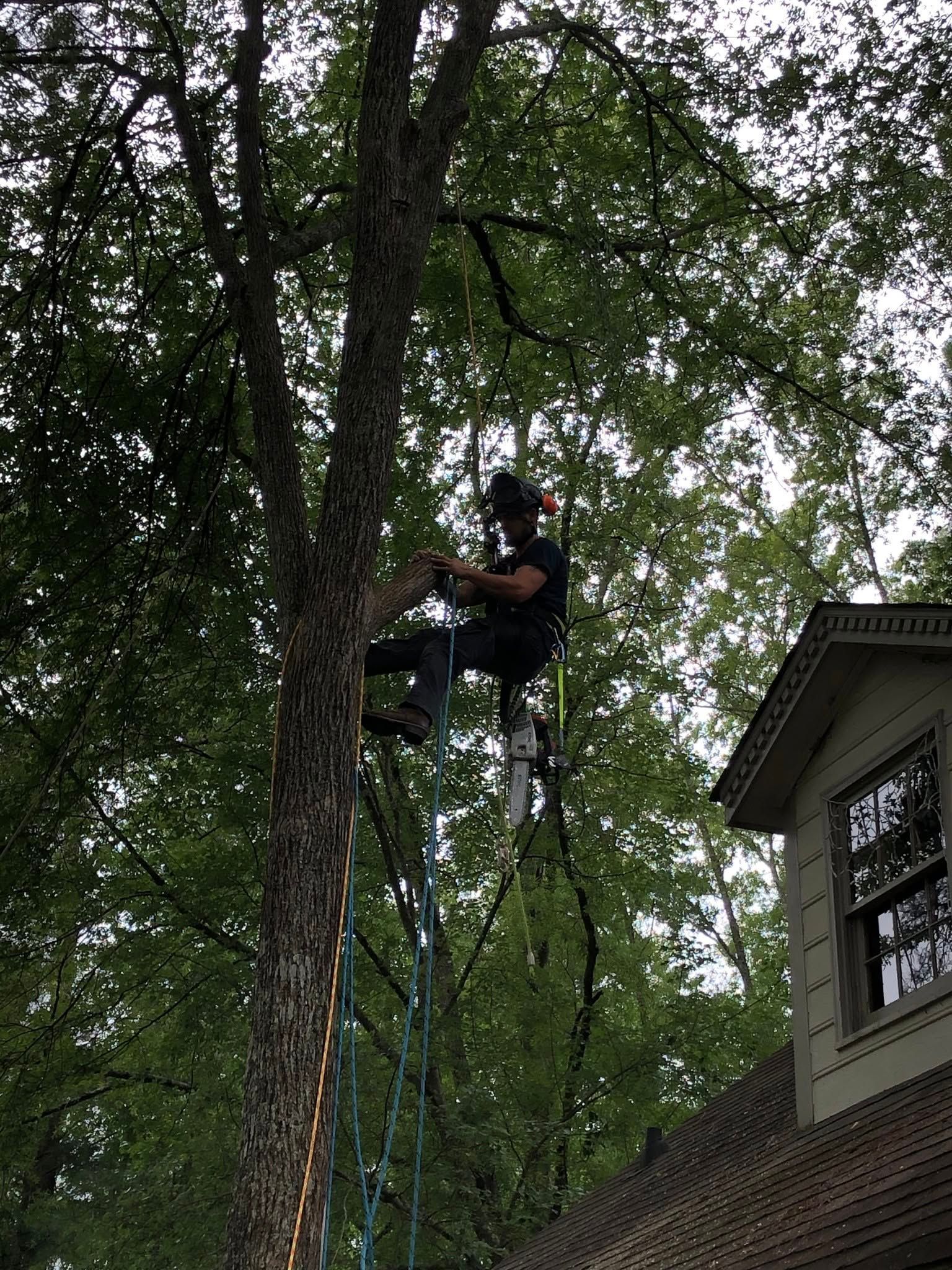
The cutting process begins with evaluating tree lean, weight distribution, and proximity to obstacles, then proceeds with strategic cuts that bring down sections in a controlled sequence. Sectional cutting involves rigging and lowering individual limbs and trunk pieces rather than felling the entire tree in one direction, which is necessary when clearance is limited or when trees stand close to power lines, buildings, or other trees. Cleanup follows immediately, with all cut material removed and the site left clear of debris.
Arrange an on-site consultation to review tree location, lean direction, and nearby obstacles that affect removal approach.
How Tree Cutting Addresses Safety Risks
Removing hazardous trees eliminates the immediate threat of falling limbs or full tree failure during storms, which is particularly important for trees with visible decay, split trunks, or root system damage. Cutting also clears sight lines along fence rows and property boundaries, improves sunlight penetration to ground-level landscaping, and removes obstacles that interfere with construction access or utility line clearance. For trees growing too close to structures, removal stops root systems from continuing to expand under foundations or driveways.
After cutting, you notice the absence of overhead branches that previously scraped roofing or dropped debris into gutters, clear access along fence lines that were previously blocked, and improved visibility across your property. Areas that were shaded all day receive direct sunlight, which changes what plants can grow and how quickly surfaces dry after rain.
Lot clearing for residential properties often involves removing multiple trees to open yard space or establish building sites, while fence line clearing targets specific trees blocking access or encroaching on neighboring properties. Every project includes debris removal, but stump grinding is typically scheduled separately unless specifically requested as part of the cutting service.
Common Questions About This Service
Cutting questions generally focus on how trees are removed in tight spaces, what happens to debris, and how to decide which trees need removal.
What does sectional cutting involve?
Sectional cutting means removing a tree in controlled pieces rather than felling it whole—climbers or rigging systems lower individual limbs and trunk sections to the ground in sequence, preventing damage to structures, landscaping, or other trees within falling distance.
How do you cut trees near power lines or buildings?
Trees near obstacles require rigging systems that control each piece as it's cut, along with precise directional cuts that prevent uncontrolled movement—work near power lines may require utility company coordination to de-energize lines temporarily if clearance is insufficient.
What signs indicate a tree should be removed?
Visible indicators include significant lean toward structures, large dead branches in the canopy, trunk cracks or splits, root exposure due to soil erosion, and fungal growth at the base indicating internal decay that compromises structural stability.
Does tree cutting in Spartanburg require permits?
Residential tree removal on private property typically does not require permits unless the tree is protected due to size or species designation, but commercial properties and trees in public right-of-way areas may have regulatory requirements that need verification before work begins.
What happens to the wood and debris after cutting?
All material is removed from your property—larger trunk sections can be left as firewood logs if requested, while branches and smaller material are chipped or hauled to disposal facilities, leaving your site completely clear.
Open Canopy Tree Service evaluates each tree's condition, location, and risk level to determine the safest cutting approach for your property. Contact us to schedule an evaluation and discuss which trees pose concerns and what removal involves.